
Holistic Cross-Platform Research at Scale
Scaling Mission-Critical Systems for Major Theater Operations
Lead UX Researcher | U.S. Air Force | Jan 2023- Aug 2023
Note: This case study has been sanitized to remove sensitive information, with select details and images blurred or redacted in accordance with security requirements.
Mission 🎯
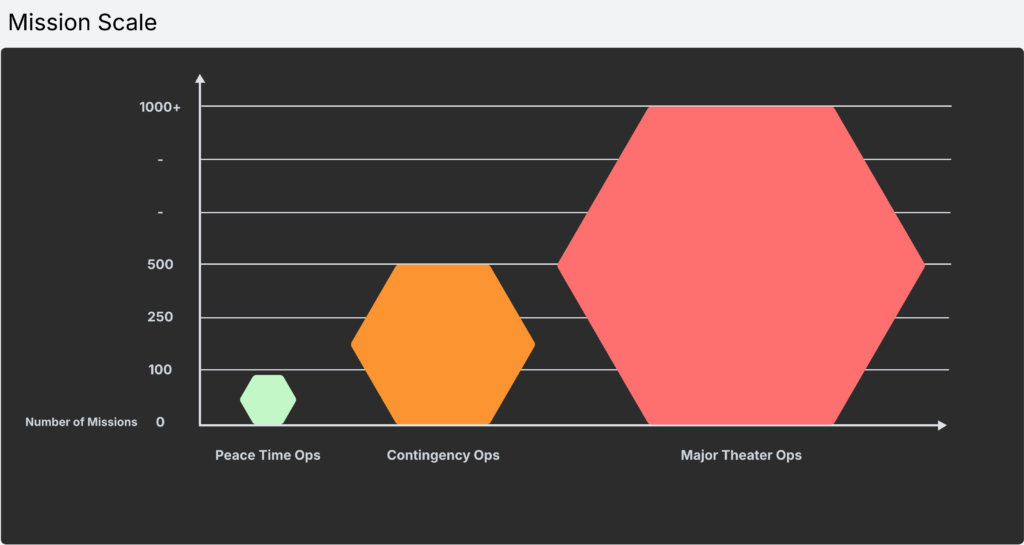
Understand how the software suite(s) must scale to support Major Theater Operations, where mission planning & execution occur on a much larger scale, under tighter timelines and with many new operators that need to be onboarded quickly.
Scope: Conduct holistic UX research across the suite to inform product strategy, scope, and scaling requirements for Major Theater Operations (MTO).
Challenge
- Limited direct experience with Major Combat Ops (lots of speculation, differing opinions)
- Tight timeline for insights → roadmap alignment
- Access to users across multiple operations centers
- Large, complex ecosystem with overlapping priorities and out-of-scope domains
Approach
- Contextual inquiry, site visits, and observation of exercises & training drills
- Conducted 100+ user interviews with current & prospective operators
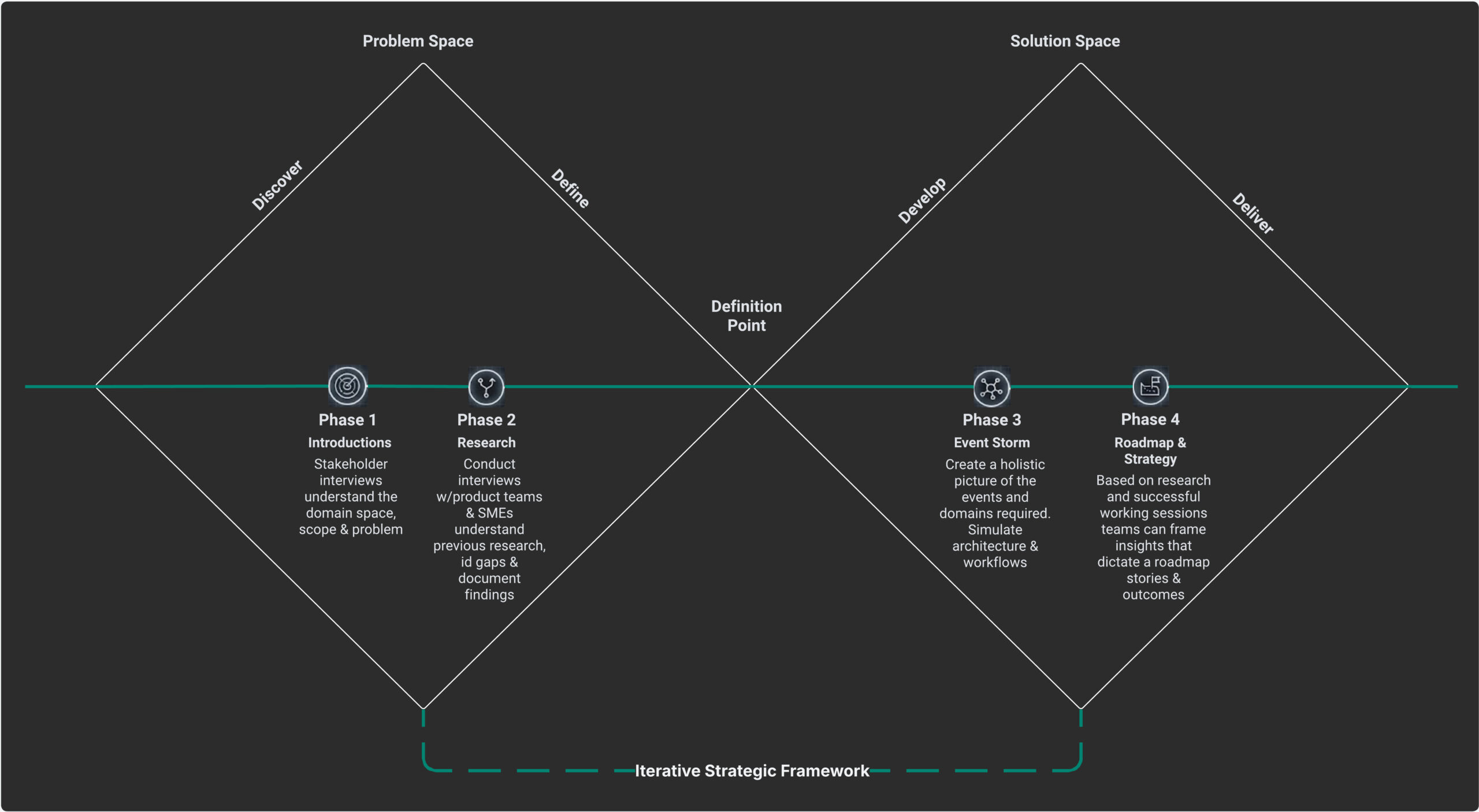
- Service blueprints, job mapping, MoSCoW prioritization workshops
- Comparative analysis between peacetime vs. major combat workflows
- Partnered with product leadership to align findings with known capability needs
Impact
- Delivered research artifacts that mapped jobs-to-be-done to capability gaps
- Identified scaling requirements for automation, data integrations & system load
- Informed 2-year product strategy & roadmap for the entire suite
- Defined threshold requirements for deprecating the legacy suite

Reflection
Wins: Built holistic picture of ecosystem, enabled critical roadmap decisions, established new user relationships.
Challenges: Information overload, speculation, presenting findings for diverse audiences, gaps outside product scope.
Next Time: Break research into two layers — high-level continuous insights + deep-dive, prioritized projects for near-term delivery.
Learn More
Diving into the details....
Holistic Cross-Platform Research at Scale
Outcome
- Deliver research artifacts that inform the scope and scale of what is necessary to support Major Theater operations from a software capability standpoint across the entire Air Tasking Cycle
- Identity jobs to be done, capability gaps and any necessary data integrations
- Identify MoSCoW opportunities to scale the suite
- Define major theater operations vs major combat operations
Scope
Conduct Research to inform product strategy, scope and scale for the entire suite of applications
Agency & Users
Major theater operations for the U.S. Air Force Air Combat Command
Duration
January 2023 – August 2023
Research Team
2 UX Researchers
My Role: Lead UX Researcher
Mission & Challenges
Operational Problem
During Major Theater Operations (MTO), airmen must be able to plan and execute missions at a far greater scale and within shorter timelines than current tools support. Existing workflows rely heavily on manual input, slowing down planning and execution while increasing opportunities for errors. The legacy suite, though previously tested for MTO, is outdated, lacks automation, and presents a steep learning curve for new operators—making it ill-suited for rapid scaling. To meet mission demands, the software must support significantly higher loads, provide seamless and error-free workflows, and offer intuitive interfaces that reduce training time for a large influx of new operators. Currently, the suite lacks critical capabilities to meet these operational requirements, raising the need to define thresholds for scalability, automation, and usability to ensure mission success.
Why it mattered
It was critical to understand the specific operational thresholds the software suite needed to meet in order to fully support a Major Theater Operation. Without these capabilities, the Air Force would remain dependent on the outdated legacy suite, which was not designed to handle the scale, speed, and usability demands of modern operations. Defining and achieving these requirements was essential to ensure the new suite could replace the legacy system and reliably support mission success.
Success Criteria
- User Insights should map to known capability needs statements and jobs to be done
- Inform product suite strategy and roadmap for the next two year
Constraints
- Gather information in a timely manner a deadline for full capability must be achieved within the next year
- Understand external domain gaps and the risk/impact they have to the cycle but don’t focus on detailed capability needs just gain a high level understanding
- Map insights to known capability needs statements
- Classified data & domain context
Discovery Research
Approach
Immersing with users to uncover operational gaps & expectations
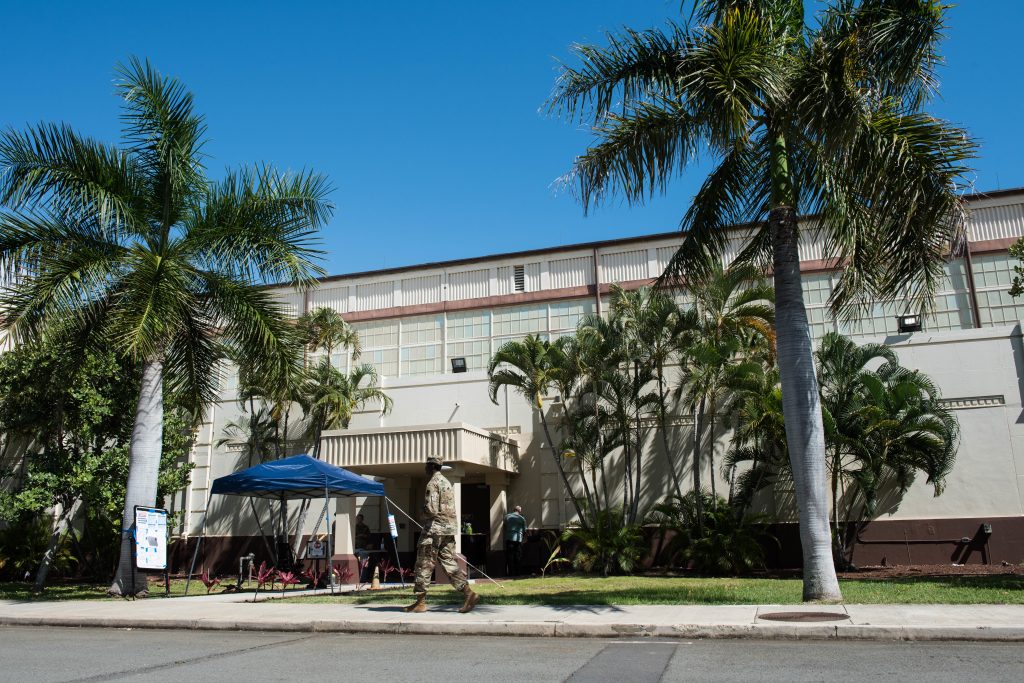
To understand how the software suite needed to scale for Major Theater Operations, we conducted extensive research combining contextual inquiry, observation, and collaborative workshops. Our team traveled to exercises and training drills to observe what large-scale operations looked like in practice, and we met with over 100 airmen—both current and prospective users—across multiple Air Operations Centers. By engaging with users in their day-to-day environments, we captured expectations, pain points, and key differences between routine workflows and combat-level demands. We mapped use cases, jobs-to-be-done, and identified gaps in system completeness for major combat operations. Alongside users and product stakeholders, we facilitated MoSCoW exercises to align business and user expectations. We also conducted comparative analyses between daily operations and large-scale combat operations, surfacing deviations and scalability challenges. To translate these findings into actionable insights, we created service blueprints, user maps, and process/service maps to explore workflow simplifications for the transitional application. This research provided the foundation for framing the core problem: ensuring the suite could evolve from supporting day-to-day planning into a tool resilient and intuitive enough to handle the scale and complexity of major theater operations.
“Major theater operations introduce a level of complexity and coordination that dwarfs our current peacetime practices. Everything becomes faster, bigger, and less forgiving.”
- Recreation feedback from an AF Commander
Challenges
- Systems must support exponential mission growth and increased user load.
- Interfaces need adaptive filters, presets, and displays for higher mission tempo.
- Wartime-only tasks must be executable by non-routine operators.
Situational awareness must extend beyond the theater. - Real-time data and display updates are essential.
- Rapid onboarding requires intuitive tools with minimal training.
- Interfaces must reduce cognitive load and guide decisions intelligently.
- Manual data entry and duplicate inputs are unsustainable.
- Shared planning environments (sandbox/whiteboard views) are required.
- Filters must help users isolate mission-critical information.
- Applications must exchange data with external systems.
- Redundant and resilient architectures ensure continuity under stress.
- Automation reduces operator burden and increases precision.
- Feedback loops accelerate capability improvements.
- Real-time synchronization maintains a single source of truth.
Insights
- Stakeholders had strong opinions but limited firsthand MCO experience.
- No prior models existed, creating ambiguity and speculative requirements.
- Competing priorities made alignment on a unified mission vision difficult.
- Critical domain areas were previously under-researched or ignored.
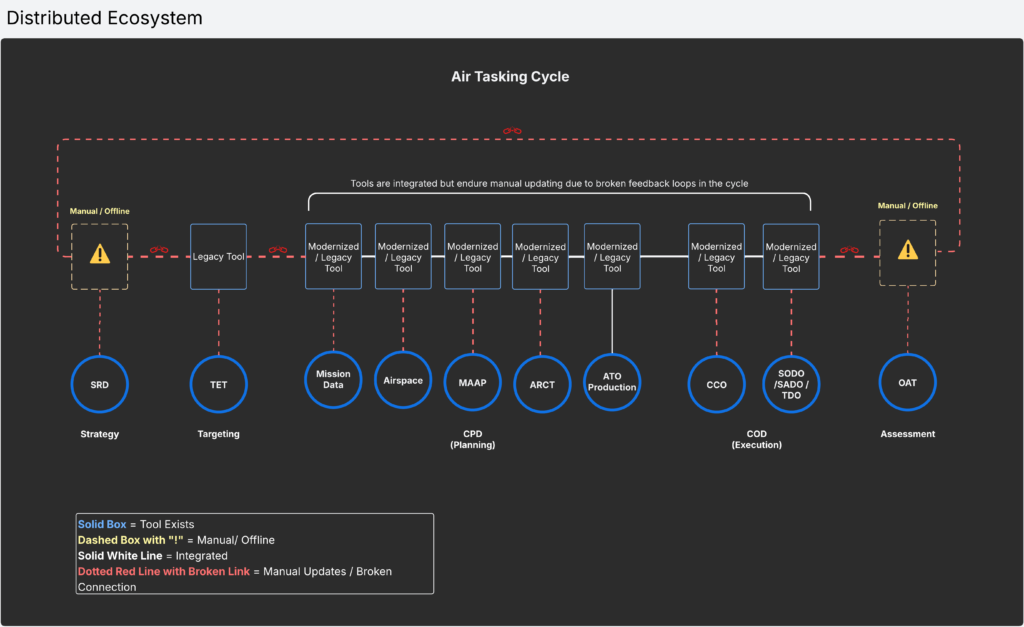
- No comprehensive domain map existed to show dependencies or gaps.
“Certain mission areas are no longer optional—they must be fully capability-ready within the next few years. Delay is not a strategy.”
- Recreation feedback from an AF Commander
Problem Framing
Problem Statement
Airmen need to rapidly plan and execute large-scale missions during Major Theater Operations, but the legacy suite is outdated, manual, and difficult to use. Current workflows slow execution, introduce errors, and cannot scale to meet operational demand—making automation, scalability, and intuitive design critical to mission success.
– “Outdated legacy suite slowed large-scale mission planning with manual workflows, errors, and poor scalability.” –
Core Jobs To Be Done Use Cases
Primary Users
- Airmen Operators across the Air Tasking Cycle
- Complete Air Tasking Cycle at scale to support major theater combat operations from start to finish
- Include Air Tasking Order creation and execution
Research Objectives
- Conduct user research to understand Major Combat Ops and what is required from a user standpoint
- Handed off research findings to Leadership and Portfolio level Product Managers
- Produce artifacts that speak to the gap areas with capabilities, jobs to be done and features that need to be addressed
Strategy & Exploration
Research Artifact
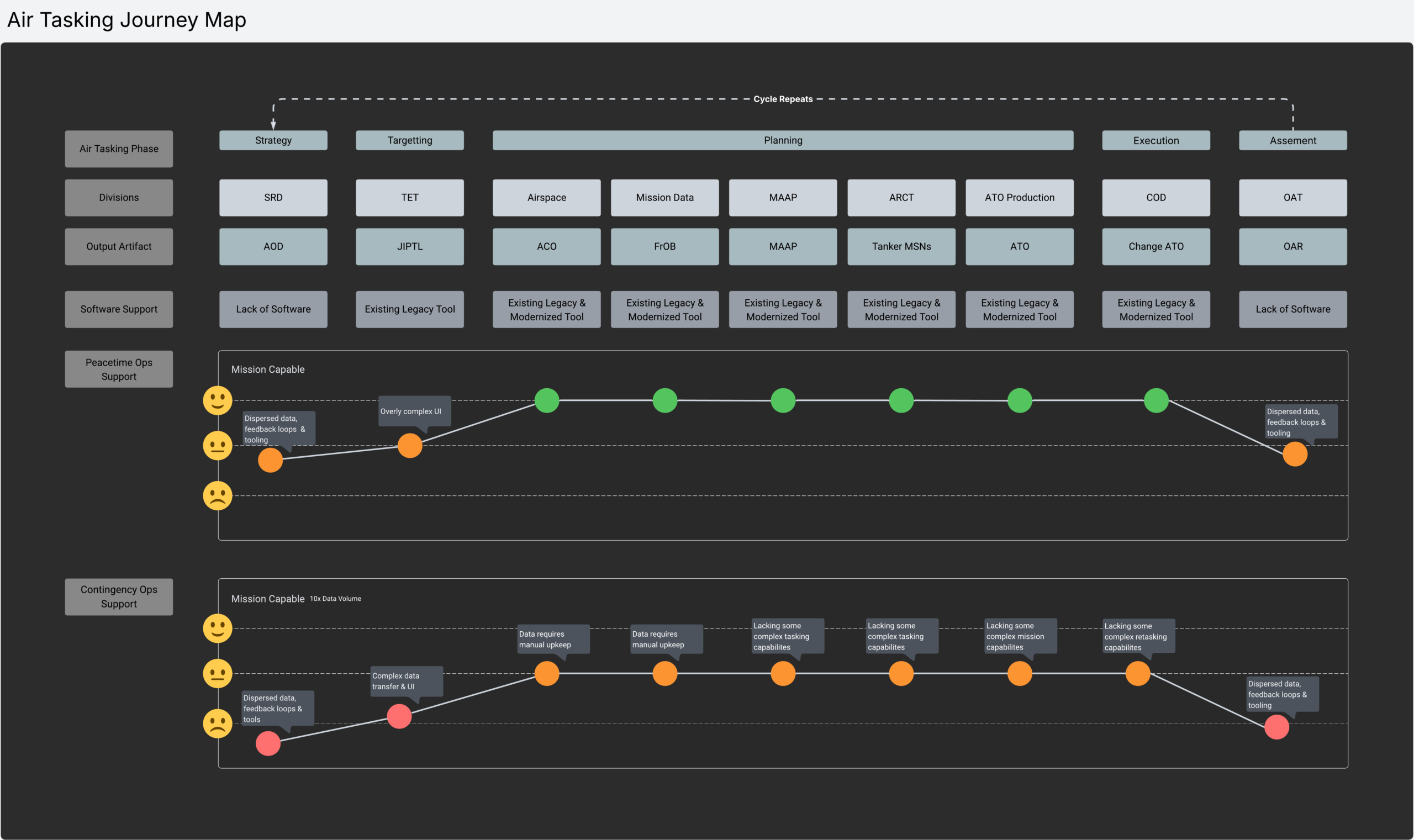
Airmen needed a faster, more scalable way to complete the Air Tasking Cycle at scale, from order creation through execution. Through user research, I uncovered pain points in outdated, manual workflows and mapped subtasks into a user journey map artifact to visualize where gaps occurred. These insights were delivered to leadership and portfolio-level product managers, highlighting critical capability needs and guiding future design and development toward scalable, intuitive solutions for Major Theater Operations.
User Journey Map
UX Research Contribution &
Collaboration
UX Research
- Established relationships with new set of users and a whole new air operations center
- Led a small UX Design Research Team
- Delivered research insights and proposed recommendations
- Jobs to be done board and user flow diagram
- Facilitated 100s of user interviews
- Observed multiple exercise
- Presented findings to key stakeholders, leadership and product teams
Collaboration
- Worked closely with leadership and stakeholders to discriminate findings
- Worked with product to strategize user an an business priorities
- Worked as a design research pair
Reflections
Outcomes &
Reflection
What worked
- Gathered lots of new insights and developed a nice picture of the current state of the whole ecosystem
- Enabled the delivery of critical strategic insights that serviced the delivery of the product line roadmap
Challenges
- Limited direct access to users for research and validation.
- Abundance of information mixed with speculation, making insights harder to verify.
- Critical gap areas identified but deemed out of project scope.
- Unmet user needs fell outside the existing product line, limiting opportunities to address them.
- Challenge of presenting complex information in a format digestible for multiple audiences.
- Large volume of legacy research required review and revalidation.
What we would do different
- Align earlier with leadership on strategic priorities to ensure clarity on which air operations centers to focus on first.
- Establish a two-layer research approach—continuous high-level research paired with focused, near-term delivery research—to provide clarity and balance leadership needs.
Leadership Insight
- Drive alignment with leadership early on around scope, research priorities, and audience needs—ensuring teams focus on the highest-value gaps, present insights in a digestible way for decision-makers, and avoid wasted effort on out-of-scope areas.